How a Residential Electrical Service Call Works
Here is what to expect when an electrician comes to your house, and how to get ready so the visit goes smoothly.
September 30, 2026 · 4 min read
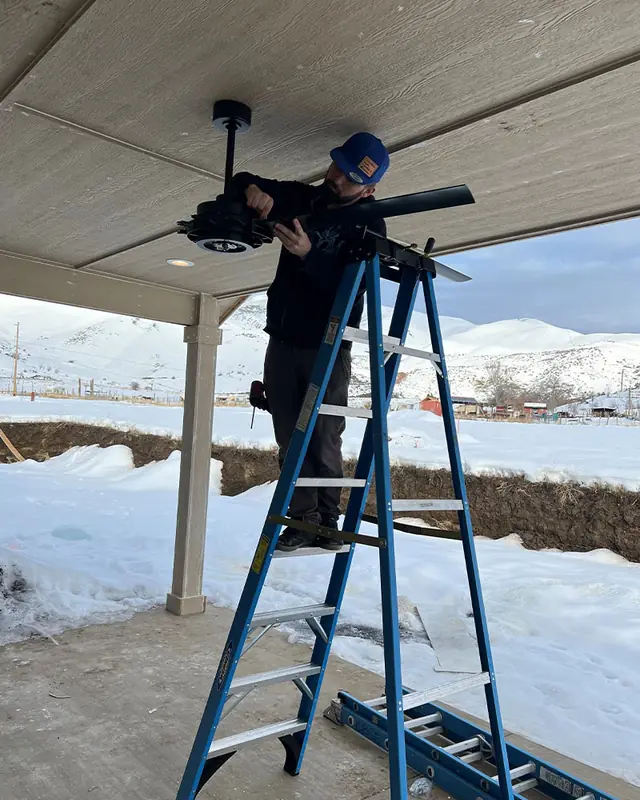
A flickering light, a dead outlet, a breaker that won't stay on. Most homeowners call an electrician only a handful of times while they own a house, so it's normal not to know what the visit will look like. This is how a residential service call works at Columbia Basin Satellite & Electric in Kennewick, and what you can do ahead of time to make it go smoothly.
None of it is complicated. The idea behind the process is simple: you should know what's happening, roughly how long it will take, and what materials are involved before anything turns into a surprise.
What a service call is
When something in your home isn't working right, the company sets up a service call at its hourly rate. That's the starting point for troubleshooting: a dead circuit, a switch that does nothing, lights that dim when the dryer starts, an outlet that quit working after a storm. You don't need to know what's wrong. Describing what you see and hear is enough. Tell the office when the problem started, which rooms are affected, and whether anything changed right before it began, like a new appliance or a power outage.
A service call is different from a bid. A bid is a written plan and price for a defined project. A service call is for finding out what's wrong and, when the fix is quick, fixing it while the technician is there.
The first hour
The technician arrives and assesses the problem. That usually means testing the circuit, checking the outlet, switch or fixture, looking at the panel, and tracing where the trouble starts. Plenty of problems turn out to be a failed device, a loose connection or a worn breaker, and those can often be handled on the spot.
If the issue can't be fixed in the first hour, the technician stops and talks it over with you. You'll hear three things:
- What needs to be done to fix the issue
- Approximately how long the repair will take
- The cost of the materials that will be used
That conversation is the whole point of the first-hour approach. It's there so there are no unexpected expenses. You decide how to proceed with the full picture in front of you, instead of learning halfway through a repair that it's bigger than it looked.
Small jobs: lights, outlets and similar work
For service work like installing new lighting or adding and replacing outlets, the company can usually give you an estimate over the phone, depending on the scale of the job. The more detail you can give, the better that estimate will be. Tell them how many fixtures or outlets you want, what the ceiling is like (flat, vaulted, high), whether there's already a box and wiring in place, and whether any walls would need to be opened.
A phone estimate is a rough number by nature. Once the technician arrives, they go over the work with you to make sure everything gets done to your liking. That's your chance to point at the exact spot where you want the fixture, or to add the second outlet you forgot to mention on the phone.
Larger jobs: site survey, walk-through and bid
Bigger projects follow a different path. For larger jobs, the company sets up a site survey. A technician walks through the project with you and gets the details needed: where things will go, what's already there and what the work will involve. After that, you receive a formal bid by email.
Once you accept the bid, you go on the schedule. The company says it strives to respond to every request for an estimate within 1 business day, so reaching out early is worthwhile if you're planning around a deadline like a holiday gathering or a remodel start date. Your electrician will tell you whether your project is big enough to need a survey, so you don't have to guess.
Getting ready for the visit
A little preparation saves time on site, and time on site is what a service call is billed on. These steps help:
- Write down what's happening, when it started, and which rooms or circuits are affected
- Clear a path to the electrical panel, which is often in a garage, basement or utility room
- Move furniture and boxes away from the outlets, switches or fixtures involved
- Note which breakers have tripped and whether they reset
- Have the address and a phone number you'll answer ready, along with any gate or door codes
- Put pets in another room, since doors will be open and tools will be out
- Make a short list of any other small jobs, because a technician already in your house is a good time to mention them
One more tip. If a breaker keeps tripping, leave it off and tell the technician when they arrive. Switching something off is fine. Taking the cover off your panel is not a homeowner task, and it's one of the places where a small mistake can hurt someone.
If something at your place needs a look, Columbia Basin Satellite & Electric is at 6821 W Clearwater Ave # C in Kennewick, open Monday through Friday from 8 to 5. Call (509) 783-7283 or email solutions@callcbse.com and describe what's going on. The company stands behind its work with a 100% satisfaction guarantee.
Columbia Basin Satellite & Electric, (509) 783-7283
Call (509) 783-7283More articles
Planning a TV Wall or Home Theater Before the Crew Arrives
The decisions worth making before anyone opens a wall for your TV, speakers or cameras.
Questions to Settle Before Adding a Home EV Charger
A home charger is mostly a wiring project, so the best questions are about your garage, your driveway and your panel.